As global supply chains shift, these nine startups are working across the battery value chain to unlock new capabilities and resilience.
Australia imports roughly 90 percent of its liquid fuels. Every global shock - a war, an OPEC decision, a freight disruption - lands directly on businesses, families, and supply chains with almost no buffer. When diesel prices surge, freight operators park their trucks. When supply chains buckle, the cost flows through to everything.
The clean energy transition is the long-term answer to that vulnerability. But it only works if we get the full picture right - and right now, we're missing a critical piece: batteries. Who makes them, what goes into them, and whether any of that happens domestically.
That question is at the heart of the Supercharge Australia Incubator, a joint initiative of EnergyLab and New Energy Nexus, and the nine startups joining its second cohort.
These companies are tackling the full lithium battery value chain - the materials that go in, the chemistry that makes them safer and longer-lasting, the systems that track health across an entire lifecycle, the infrastructure that lets EVs feed power back into the grid, and the manufacturing capability that keeps more of this value onshore. They come from New South Wales, Victoria, Western Australia, and South Australia. They span deep materials science and accessible consumer hardware. What they share is a conviction that Australia has the talent, the resources, and the urgency to lead.
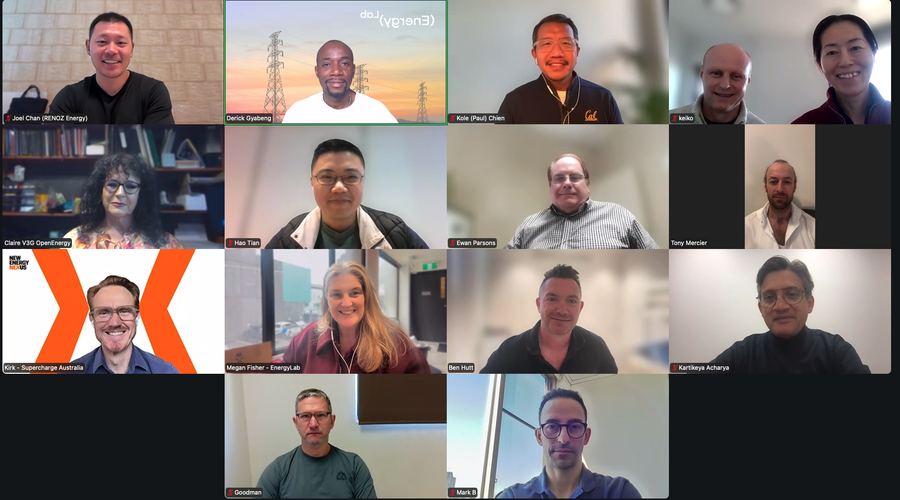
Cohort at the kickoff session
Over 12 weeks, each startup in the incubator receives hands-on mentorship, strategic guidance, and introductions to the partners and investors who can help them scale. The programme is designed to move early-stage founders past the prototype phase and toward commercial traction.
That support matters more than ever right now. Ben Hutt, Managing Director and CEO of Janus Electric - an EnergyLab alumnus and a supporter of the second Supercharge Australia Innovation Challenge - offers a clear view of how the landscape has shifted.
"The early frenzy of activity in climate tech has ended. This has led to a scarcity of venture capital - the spray and pray is over - and made it harder for early-stage companies to raise money and scale to a point where they have a relevant place in the market."
The startups that will break through are those who can demonstrate real-world traction, not just promising technology. That's precisely the gap programmes like this one are designed to close.
Meet the #2 cohort and why they are excited to be part of the Supercharge Australia Incubator:
Cosmos Infinity (NSW) is working at one of the hardest frontiers in battery chemistry. Founded by Paul Chien, the company is developing next-generation solid-state LFP batteries engineered for significantly enhanced safety, longer cycle life,and cost-effective energy storage applications.
"We’re excited to join Supercharge Australia Incubator because it gives us a fast track into Australia’s rapidly growing energy storage market, which strongly aligns with our safe, long-life solid LFP technology. The program provides access to key partners, pilot opportunities, and funding pathways, helping us accelerate commercialization and scale deployment in real-world applications."
DELECTRO (NSW) is making the case that decarbonisation doesn't have to mean compromise. Founder Kartikeya Acharya designs low-carbon products with genuine aesthetic appeal - including the DELOCA micro-kitchenette - proving that the shift to clean energy is something people can actually want to live with.
"It is exciting to be part of a globally well connected network that strives towards clean energy innovation!"
DYNOVY(NSW) is tackling a problem that grows more urgent with every battery: how do you know the it’s condition, and whether it's safe to reuse? Ben Behi and Mark Behi's platform technology delivers fast, reliable battery health assessments across an entire lifecycle - from production through to second life and recycling.
"We are excited to join the Supercharge Australia Incubator because it will help us strengthen DYNOVY with structured support from experienced mentors, refine our product with real industry insight, and build meaningful connections across Australia’s battery innovation ecosystem, all of which will accelerate our path to real deployments and commercial impact."
HASAKI Research & Technology Centre (VIC) is addressing one of the less visible but most consequential challenges in electric vehicles. Founders Andrew Royale and Keiko Araki are developing a new thermal management secondary system for EVs - targeting the heat management failures that quietly erode battery performance and longevity.
"Because we have a great opportunity to grow our business through expert advise and guidance"
IonMatrix Energy (NSW) is advancing the materials that go into next-generation batteries. Founder Hao Tian is developing battery materials and technologies engineered for safe, high-performance energy storage - with a clear path from laboratory discovery to commercial deployment.
"I am excited to join the Supercharge Australia Incubator as it provides a unique opportunity to translate our advanced battery materials research into real-world applications."
Ixium Technologies (NSW) is going upstream. Co-founders Jonathan Goodman and Richard Ellison have built modular lithium purification systems that produce battery-grade lithium carbonate at half the cost and a third of the emissions of conventional refining. Given lithium carbonate sits at the heart of battery supply chains, breakthroughs in its production can unlock lower costs and faster scale across the entire energy transition.
"We are excited to support the future of lithium in Australia and the domestic production of batteries from Australian materials."
Mercier Designs (NSW) is solving a practical problem for everyday EV users. Founder Tony Mercier has developed a deployable, exchangeable battery swap system - giving flexible energy access to people and fleets who cannot afford downtime and cannot wait for charging.
"To help move my idea forward in a more expert, efficient & faster manner"
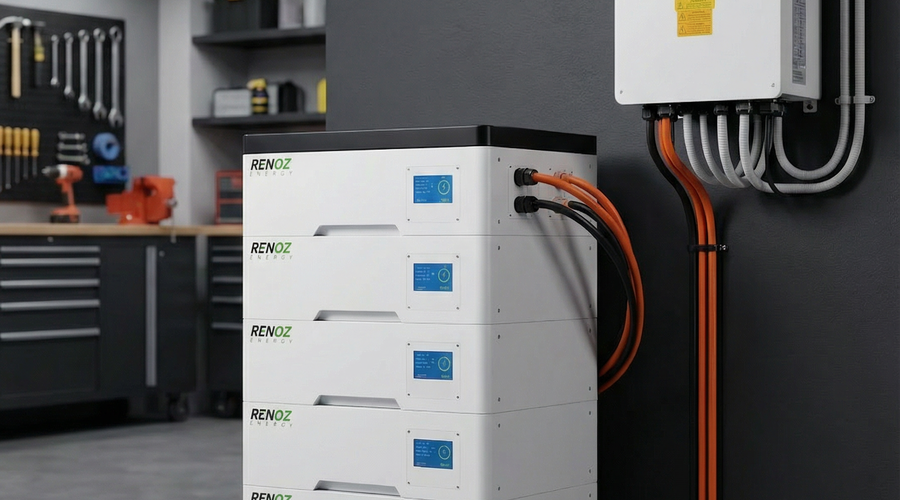
RENOZ Energy (WA) is closing the gap between the residential and utility energy storage space. Simon Chan and Joel Chan are developing bespoke batteries en masse across the commercial, agricultural, regional and resources sectors.
"Joining the EnergyLab Supercharge Australia Incubator on behalf of RENOZ Energy is something I've been looking forward to for a while. The chance to learn from, and build alongside, some of Australia's most driven energy innovators is something I'm genuinely grateful for."
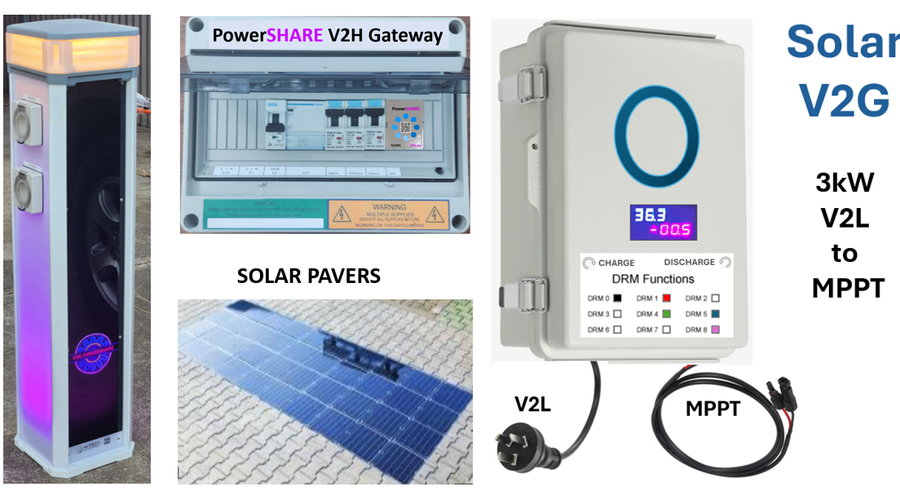
V3G (SA) wants vehicle-to-grid technology to be affordable for everyone, not just early adopters. Founders Mark Purcell and Ewan Parsons have developed V3G Bi-directional Pedestals designed to make V2G accessible at scale - turning every parked EV into a potential grid asset.
"PowerSHARE is key to unlocking EV batteries globally and V3G wants to target the market optimally."
Australia is at an inflection point: demand for batteries is rising, global supply chains remain uncertain, and the policy environment is beginning to catch up.
The gap between here and where we need to be is also, increasingly, a policy choice.
“[California, the UK, Canada, and New Zealand]...have all clearly signposted that freight electrification and decarbonisation is the biggest priority between now and 2030 - and they're backing that with subsidies. California subsidises 80 percent of the cost of electrifying a truck. Janus is a beneficiary of that. Australia needs to take note of what's happening overseas."
The startups in this cohort aren't waiting for that signal. They are building the technology and the value chain that makes it possible - so that when it comes, Australia is ready.
Supercharge Australia, a joint project of EnergyLab and New Energy Nexus, is accelerating Australia's lithium battery value chain, catalysing sovereign capability across the battery supply chain—from critical minerals to manufacturing, deployment, second-life and recycling.
return to blog