Sydney, Australia — Eleven startups have begun the Supercharge Australia Innovation Challenge #4, the flagship battery program run by EnergyLab and New Energy Nexus. This cohort is the first built around a two-way relationship with Southeast Asia, with founders from the region joining Australian teams in the same room. The cohort runs from cell chemistry and anode materials through separators, solid-state electrolytes, resource recovery, vehicle-to-home hardware, charging software and system design.
Why Southeast Asia, and why now
Southeast Asia will hold around 800 million people by 2050, and it is one of the world’s fastest growing regions for electricity demand, second only to India. If the region delivers on its national energy goals, electricity could reach 45 per cent of total final energy consumption by mid-century, and renewables could rise from under 30 per cent of the electricity mix to above 70 per cent by 2050.
Asia holds about 4 per cent of the world’s oil and gas reserves and spends in the order of US$1.1 trillion a year importing fuel, and solar paired with storage now undercuts three quarters of the gas plants still planned across the region. The clean build is also the affordable and secure one. Storage is the constraint that decides how fast it happens, and the barriers are market rules, grid connection and revenue models well ahead of technology cost.
Australia is also closely connected to Southeast Asia by time zone. Singapore, Manila and Kuala Lumpur are two hours behind Sydney during standard time, and Jakarta, Bangkok and Hanoi are three hours behind. These differences increase by one hour during Sydney’s daylight saving, but remain small enough that a founder can run partner meetings in both markets within one working day.
The flow already runs both ways. Brisbane-based StB Capital Partners funded the first lithium iron phosphate battery factory in the Philippines at New Clark City, an A$180 million plant running since late 2024 at 300 MWh a year and targeting 2 GWh by 2030, with 70 per cent of output planned for export to Australia, Southeast Asia and North America. Coming the other way, Volterra brings energy management software for EV charging infrastructure out of Viet Nam into this cohort.
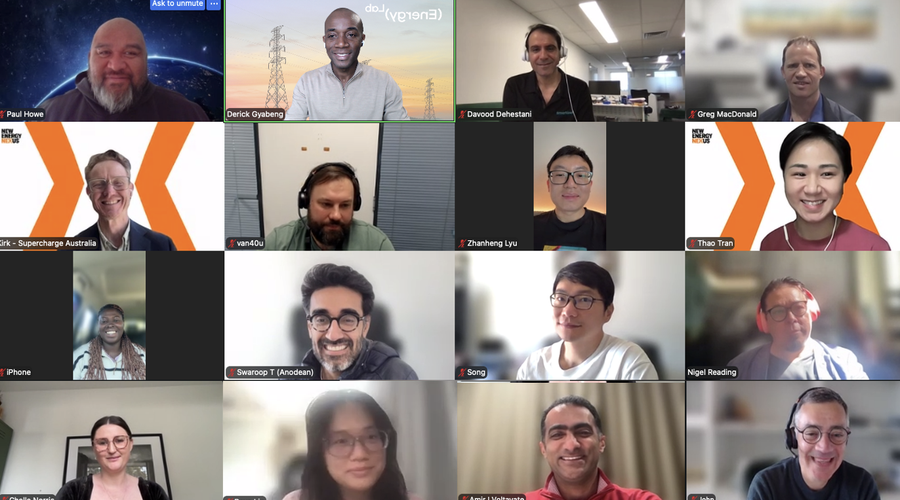
Kick-off Session
The 2026 cohort and why they are excited to join the challenge
Together, these startups cover four parts of the value chain.
Materials and cells
Anodean, led by Swaroop Tulsidas, iis commercialising the next-generation of solid-state battery cells, with double the energy density and lower new capex investment.
“Supercharge Australia is a great program for us to connect and learn from likeminded founders and advisors. As we prepare to raise capital and scale our business, the accelerator also plays a critical role in bringing together the national battery ecosystem.”
Verdant-Ion, led by Tim van der Laan, produces battery-grade carbon at low costs using renewable feedstocks
“Supercharge has been highly successful in creating new opportunities for Australia just like we hope to; we’re keen to be EnergyLab’s next success story.”
Howe Invest, led by Paul Howe, is developing a peptide-reinforced, glass-based solid-state electrolytes to advance safer, more sustainable battery technology.
“Supercharge Australia brings together the expertise and relationships needed to turn ambitious battery research into practical progress. I am excited to develop Howetika alongside people who understand the journey from novel materials to independently validated technology, strengthen our commercial direction, and build partnerships across Australia’s battery value chain. For me, this is an opportunity to contribute a distinctive Australian approach to energy storage while learning from a community committed to making it matter.”
Manufacturing
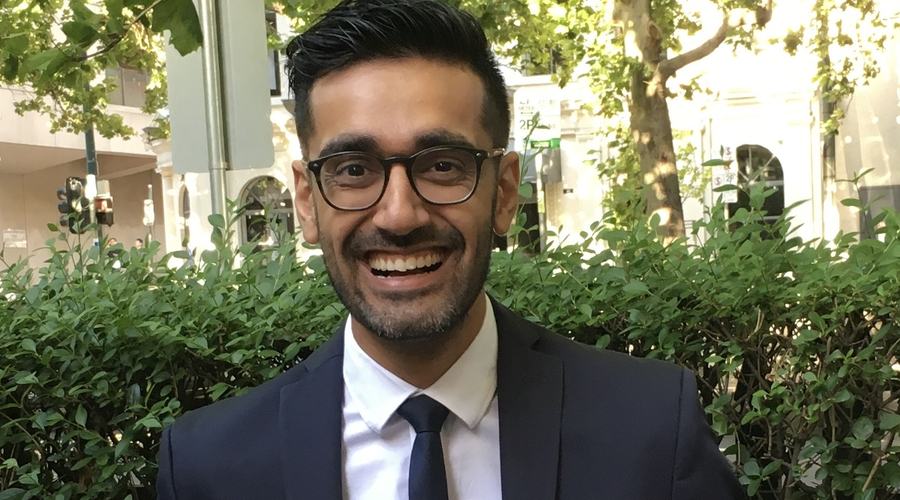
Voltavate, led by Amir H. Taheri, is developing a battery manufacturing platform that enables cell makers to produce a critical separator layer in-house, improving safety and performance while reducing production waste, cost and supply-chain dependence.
“We previously took part in Supercharge Australia, and Voltavate has since moved from lab development toward pilot-scale manufacturing and customer validation. This Challenge is a good opportunity to build the industry relationships we need for the next stage.”
Recovery
Evermatter, led by Zhanheng Lyu, transforms battery wastewater from a costly waste stream into an urban mine for reusable battery materials.
“Supercharge gives us the opportunity to turn Evermatter from a validated technology into a scalable circular-economy business, while connecting us with the partners who can help make fluorine recovery part of the future battery supply chain.”
SheRecycles, led by Kesewa Agyemang, is an AI-assisted battery take-back that captures, routes and tracks batteries that fall outside standard recovery channels.
“I’m excited to use Supercharge to rigorously test SheRecycles against Australia’s battery industry. I want to work with mentors and industry partners to identify where batteries fall outside existing recovery systems, test our workflow on real cases, and determine where increased capture, recovery intelligence and chain-of-custody visibility create enough value for organisations to pay.”
Applications and systems
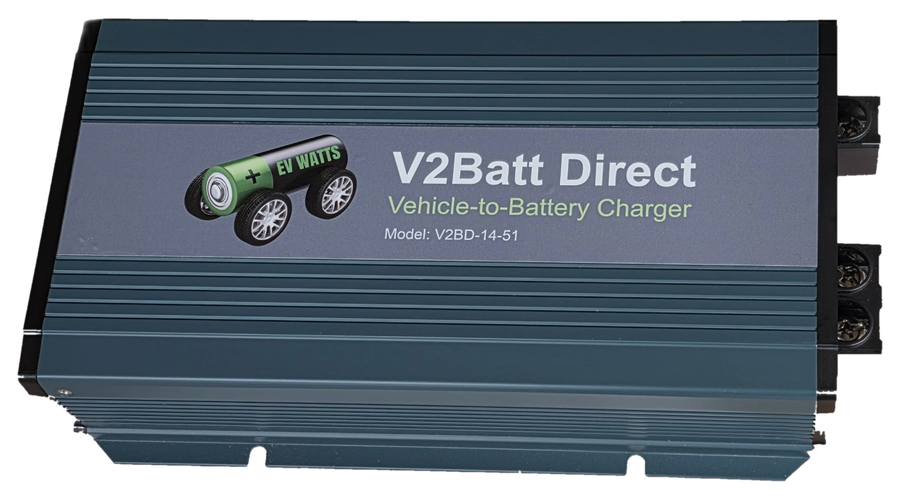
EV Watts, led by Greg MacDonald, provides bidirectional EV charging by connecting an EV to a home solar battery system.
“Hundreds of thousands of EVs in Australia carry a large battery and V2L capability that are severely underutilised. Supercharge Australia will help us connect these vehicles into home battery systems and make better use of their potential.”
Volterra, led by Tô Lăng, is a multi-layered energy management and optimization company that integrates Deep Tech (AI, Big Data, IoT, Digital Twin, BESS, and renewable energy) for EV charging infrastructure.
“We are thrilled to join this cohort as it offers an unparalleled environment to connect with industry leaders and subject matter experts in the Australian market. This program is the perfect catalyst for us to learn from established innovators and scale our impact on a global stage.”
ASYNSIS, led by Nigel Reading, is developing MetaLoop, a biomimetic infrastructure concept combining personal rapid transit, renewable energy, urban agriculture and goods movement on one platform.
“BECAUSE IT’S LATER THAN WE THINK, AND WE HAVE TO ACCELERATE OUR NATURE POSITIVE, REAL ZERO EVOLUTION — TO BE SAVING BY EMULATING GAIA. AND RENEWABLES STORAGE IS A KEY ENABLER TO FOSTER THE JUST TRANSITION, SOONER, EASIER.”
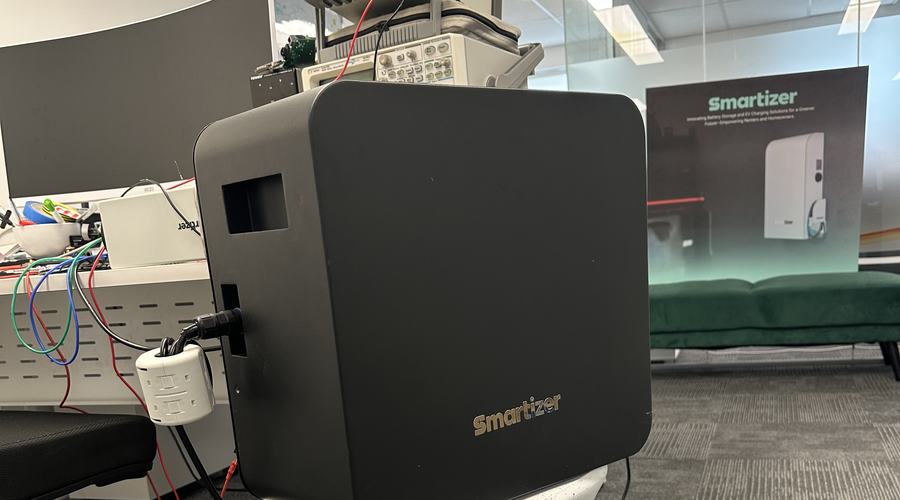
Smartizer, led by Davood Dehestani, is developing portable, modular energy storage with intelligent energy management to make home batteries accessible to households that conventional home battery systems don’t serve today.
“Australia has world-class battery resources, but we also have an opportunity to create world-class battery products. Smartizer wants to be part of that next chapter by making energy storage simpler, smarter and accessible to millions of households that conventional home batteries don’t serve today. Supercharge Australia gives us the opportunity to work with the people, expertise and industry network that can help turn Australian-developed technology into a globally scalable product.”
Found Power, led by Chelle Norris, is building a fleet of campervans that turn every vehicle into a mobile energy asset using vehicle-to-grid technology.
“I’m excited to join Supercharge Australia Innovation Challenge #4 because I believe in EnergyLab and know this program will help Found Power build the future of road trips in Australia.
I love road tripping, and I want to make it possible for more people to explore Australia in electric campervans that are quieter, more affordable and better for the environment. We’re not simply electrifying a vehicle; we’re turning every campervan into a mobile energy asset using Vehicle-to-Grid technology, allowing our customers to earn income from their vehicle while it’s parked.
I’m excited to bring the perspective of a 100% women-owned Australian startup that is connecting clean energy, tourism and mobility in a way that simply hasn’t been done before. I want to learn from the Supercharge community and build the relationships that will help us take Found Power from an Australian startup to a global business.”
What happens next
Over the coming weeks, the cohort will work with matched mentors, refine commercial strategies, and take part in sessions led by industry, investment and technical experts. They will appear at All-Energy in Melbourne, receive pitch coaching, and present to a judging panel before an audience of investors, policy makers and peers at the Supercharge Australia Innovation Challenge Awards on 28 October.
The winning Australian company will receive guided market entry and a funded visit to Southeast Asia. The best Southeast Asian company wins the same into Australia. Both prizes are delivered through New Energy Nexus country programs in Indonesia, Thailand, Viet Nam and the Philippines.
National significance
Australia produces a large share of the world’s lithium and captures a fraction of the value it creates downstream. The same gap is opening in the region next door, where demand is growing faster than the manufacturing and grid infrastructure to serve it. Several companies in this cohort work on exactly that gap, turning Australian research and local feedstocks into anode material, cells and electrolyte recovery onshore.
Supercharge Australia has now supported 50 startups, which have raised more than A$200 million between them.
“Australia has the minerals, the renewable resource and the research base. Southeast Asia has the demand, the manufacturing scale and a grid being built right now. This cohort works both of those at once, which is why we have founders from Viet Nam in the room alongside Australian teams. A company that can serve a customer in Jakarta in the morning and one in Melbourne in the afternoon is not choosing between markets; it is building for the region it sits in,” said Kirk McDonald, Project Manager for Supercharge Australia at New Energy Nexus.
return to blog